

Why Do Walnut Kernels Taste Bitter? Skin-On vs Skinless Guide for Buyers (2026)
Why do walnut kernels taste bitter?
Learn the difference between skin-on and skinless walnuts and how to choose the right type for your market.
Walnut kernels are widely used in retail, baking, and food processing industries. However, taste differences—especially slight bitterness—can influence customer acceptance and repeat orders.
In this guide, we explain why walnut kernels may taste bitter and compare skin-on vs skinless types to help buyers make the right sourcing decision.
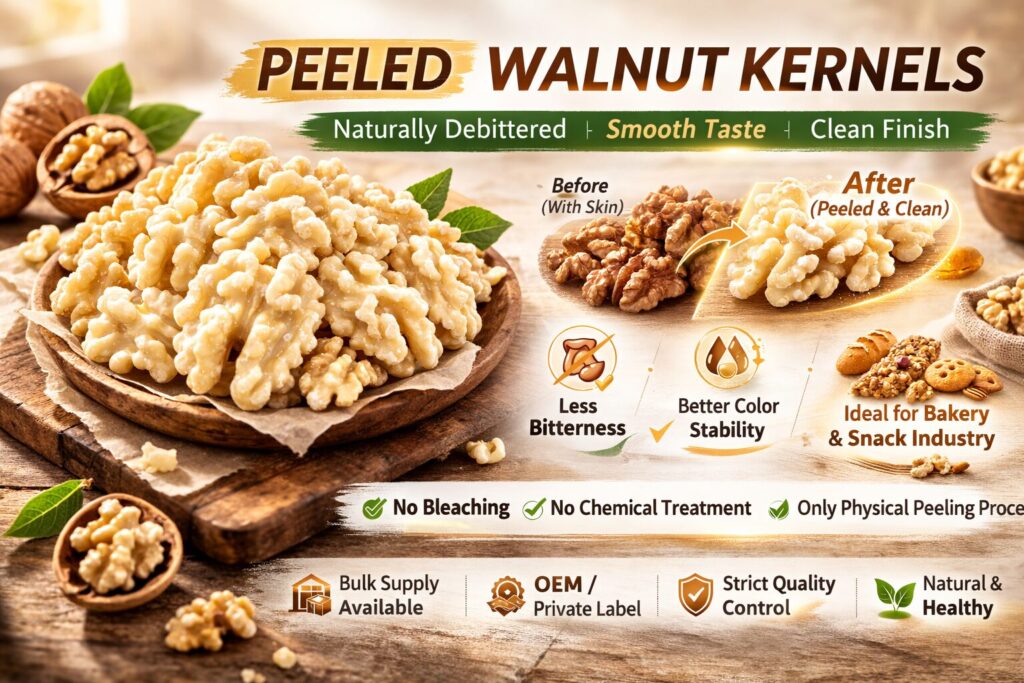
1. Why Do Walnut Kernels Taste Bitter?
The main reason why walnut kernels taste bitter is the thin brown skin (pellicle) covering the kernel.
This natural layer contains:
- Tannins
- Polyphenols
- Natural antioxidants
These compounds are beneficial for health, but they can create:
👉 A slightly bitter or astringent taste in some batches
It is important to note that this bitterness is natural and does not indicate poor quality.
2. Skin-On Walnut Kernels (Natural Type)
Skin-on walnut kernels are the most common type in international trade.
Key Features
- Natural appearance
- Higher nutritional value
- Stronger walnut flavor
- Slight natural bitterness
Advantages
✔ Cost-effective
✔ Less processing required
✔ Ideal for food manufacturing and baking
Considerations
- Taste may vary depending on origin and harvest season
- Slight bitterness may not suit all retail markets
3. Skinless Walnut Kernels (Blanched Type)
Skinless walnut kernels are processed to remove the brown skin.
Key Features
- Light color
- Smooth texture
- Milder flavor
- Reduced bitterness
Advantages
✔ Better taste consistency
✔ More suitable for direct consumption
✔ Higher acceptance in supermarkets and retail
Considerations
- Higher processing cost
- Slightly higher price
4. Skin-On vs Skinless: Which One Is Less Bitter?
When comparing skin-on vs skinless walnuts:
- Skin-on walnut kernels → may have slight natural bitterness
- Skinless walnut kernels → significantly milder taste
👉 Therefore, if your concern is why walnut kernels taste bitter, the answer usually lies in whether the skin is present.
Learn more:kin-On vs Skinless: Which One Is Less Bitter?
5. How Buyers Should Choose the Right Type
Choosing the right product depends on your market and application.
Choose Skin-On Walnut Kernels If:
- You supply food processors
- Your market is price-sensitive
- Walnuts are used as ingredients
Choose Skinless Walnut Kernels If:
- You target retail or premium markets
- Products are consumed directly
- Taste consistency is important
👉 Matching product type with application helps reduce complaints and increase customer satisfaction.
6. Recommended Approach for Importers
For new buyers, the best strategy is to test both options.
👉 We recommend comparing skin-on and skinless walnut kernels side by side
This helps you:
- Understand local taste preferences
- Reduce sourcing risk
- Select the best product for long-term supply
7. Factors That Also Affect Bitterness
Besides skin, other factors can influence why walnut kernels taste bitter:
- Harvest season
- Storage conditions
- Freshness
- Processing methods
👉 Working with a reliable supplier helps maintain consistent quality.
8. Packaging & Bulk Supply Options
Walnut kernels can be supplied in:
- Bulk cartons for wholesale
- Vacuum packaging
- Retail packs (private label)
Proper packaging helps preserve freshness and reduce oxidation, which may also affect taste.
9. Related Articles
You may also find these helpful:
- Why Do Walnuts Taste Bitter? (detailed guide)
- Walnut Kernel Grades Explained
- Dried Shiitake Mushroom Applications
👉 . Related Articles
Why-do-walnuts-taste-bitter-causes-solutions-2026-guide
Walnut Kernel Grades Explained
Common-applications-of-dried-shiitake-mushrooms-in-the-food-industry
10. Why Buyers Work With Us
- Stable supply from reliable origin
- Consistent quality control
- Flexible packaging options
- Support for new market testing
- Fast response for wholesale inquiries
11. Final Thoughts
Understanding why walnut kernels taste bitter helps buyers make better sourcing decisions.
Bitterness is not a defect — it is a natural characteristic influenced mainly by the walnut skin and processing method.
Instead of asking “which is better,” the key question is:
👉 Which walnut type best fits your target market?
Both skin-on and skinless walnut kernels have strong demand—the right choice depends on your business needs.
👉 Looking for a Reliable Supplier?
We supply high-quality walnut kernels for global markets.
✔ Skin-on & skinless options available
✔ Multiple grades for different applications
✔ Stable supply & competitive pricing
✔ Free samples for testing
👉 Contact us now for samples and latest quotation: https://www.ruihejin.com/contact-us/