

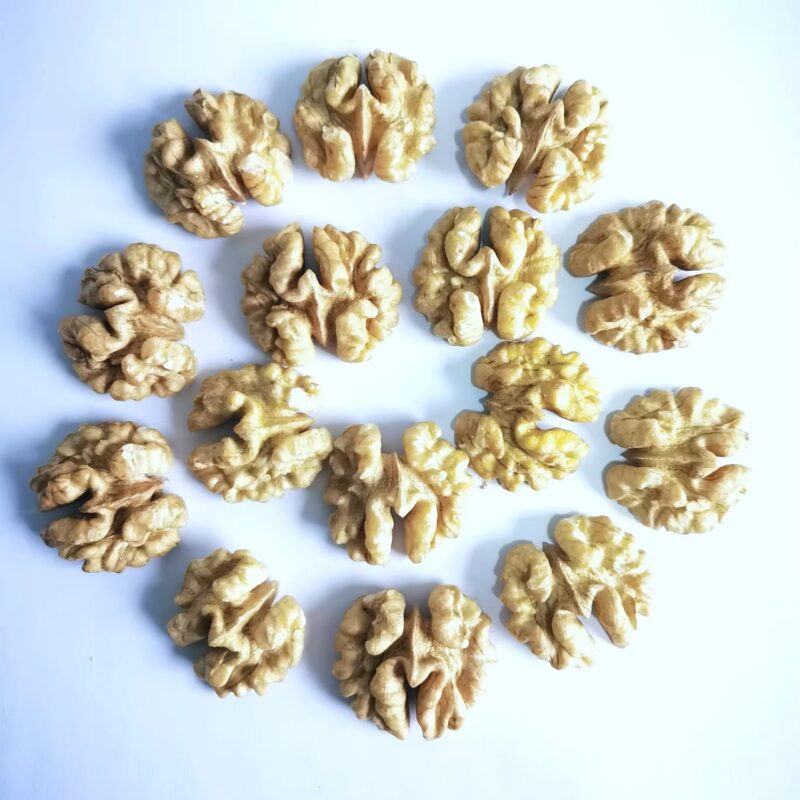
How to Choose High-Quality Walnut Kernels for Bakery and Snack Industry
Walnut kernels are widely used in bakery products, snack foods and confectionery.
Choosing the right quality is essential for product appearance, taste consistency, shelf life and cost control.
This article explains the key factors buyers should consider when sourcing walnut kernels for bakery and snack applications.
1. Common Walnut Kernel Forms
Walnut kernels are typically available in several forms. Each form is suitable for different applications.
Whole kernels
Mainly used for decoration or premium bakery products where appearance is important.
Halves
The most commonly used form for bakery and snacks. They offer a good balance between appearance, processing efficiency and cost.
Quarters
Often used in snack processing, nut mixes and fillings where uniform size and cost control are priorities.
Buyer tip:
For bakery products with visible toppings, halves are usually preferred. For snack processing, quarters are more cost-effective.
2. Walnut Kernel Color Grades Explained
Color is one of the most important quality indicators for walnut kernels.
Common color grades include:
Extra Light / Light – premium appearance, light color, higher price
Light Amber – slightly darker, widely accepted by most markets
Amber – darker color, mainly used for processing applications
In bakery and snack industries, Light or Light Amber grades are most commonly used because they provide a good balance between appearance and cost.
3. Moisture Content and Shelf Life
Moisture content directly affects shelf life and storage stability.
Recommended moisture level: ≤ 5%
High moisture increases the risk of mold and quality deterioration
Proper drying and storage are essential for export shipments
Buyers should always confirm moisture specifications before placing an order.
4. Oxidation and Quality Risks
Walnut kernels are naturally high in oil, which makes them prone to oxidation.
Common causes of oxidation:
Exposure to air
High temperature during storage
Long storage time without proper packaging
To reduce oxidation risks:
Use vacuum packing or inner plastic liners
Store in cool, dry conditions
Avoid prolonged exposure after opening
Proper handling helps maintain color, taste and freshness.
5. Packing Options for Bakery and Snack Buyers
Walnut kernels are usually supplied in the following packing formats:
Bulk cartons (commonly 10–14 kg per carton)
Vacuum packs for better freshness protection
Retail packs for snack brands and private labels
The choice of packing depends on processing method, storage conditions and target market requirements.
6. Key Considerations When Choosing a Supplier
When sourcing walnut kernels, buyers should evaluate more than just price.
Important factors include:
Consistent color grading
Stable moisture control
Reliable packing standards
Experience with bakery and snack applications
–Walnut kernels are commonly used in various bakery and snack applications requiring stable quality and consistent size.
Ability to provide samples before bulk orders
A reliable supplier helps reduce sourcing risks and ensures long-term product consistency.
Conclusion
Choosing high-quality walnut kernels for bakery and snack industry depends on kernel form, color grade, moisture level and packing method.
By understanding these factors, buyers can make better sourcing decisions, reduce quality risks and improve overall product performance.
For detailed specifications, please refer to our walnut kernels product page.
Leave a Reply