
What determines the price of shiitake mushrooms is one of the most important questions for importers, wholesalers, and food manufacturers.
If you’ve ever sourced from different suppliers, you’ve probably noticed that prices can vary dramatically — sometimes by 2 to 4 times — even when the products look similar at first glance.
So, what determines the price of dried shiitake mushrooms in real trade?
The answer lies in a combination of quality factors, production conditions, and market dynamics. Understanding these factors can help buyers avoid overpaying, improve product consistency, and build long-term supplier relationships.
Below are the 7 key factors that directly influence pricing.

1. Origin and Growing Region
What determines the price of shiitake mushrooms
Origin is one of the first factors that determines the price of dried shiitake mushrooms.
China is the world’s largest producer, but even within China, different regions produce different quality levels. Climate, altitude, and cultivation techniques all affect the final product.
For example, mushrooms grown in cooler, mountainous areas tend to have thicker flesh and stronger aroma, making them more valuable in the market.
👉 Higher reputation regions usually mean higher prices.
2. Mushroom Grade (Quality Classification)
Grade is one of the most critical pricing factors.
Shiitake mushrooms are commonly classified into:
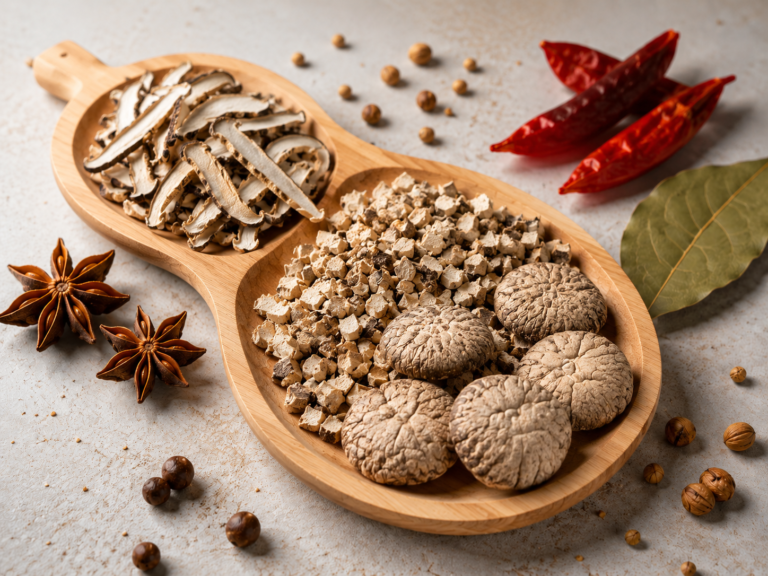
- Flower mushrooms (Donko) – thick caps with natural cracking, premium grade
- Thick mushrooms – good texture and appearance
- Thin mushrooms – flatter caps, lower grade
High-grade flower mushrooms are especially popular in premium markets and can cost 2–4 times more than lower-grade products.
3. Size of the Mushrooms
Size has a direct and visible impact on pricing.
- Large caps (4–6 cm or above) → higher price
- Medium size → standard market level
- Small or broken pieces → lower price
In many export markets, uniform size is just as important as large size. Buyers often pay more for consistency because it improves retail presentation and processing efficiency.
4. Drying Method
The drying method significantly affects both flavor and value.
- Sun-dried mushrooms develop a richer aroma and better taste
- Machine-dried mushrooms offer consistency and efficiency
Although machine drying is more scalable, sun-dried mushrooms are usually sold at higher prices due to their superior flavor profile.
5. Moisture Content
Moisture content is a technical but crucial factor that determines the price of dried shiitake mushrooms.
- Industry standard: ≤13% moisture
- Lower moisture → longer shelf life → better quality
Products with higher moisture may seem cheaper, but they carry higher risks of mold and spoilage during storage and transportation.
6. Market Supply and Demand
Like most agricultural commodities, prices are also influenced by market conditions.
Key factors include:
- Harvest yield in a given season
- Weather conditions
- Export demand trends
- Freight and logistics costs
For example, poor harvests or increased global demand can quickly push prices higher.
7. Processing and Packaging Requirements
Additional processing steps add to the final cost:
- Stem removal
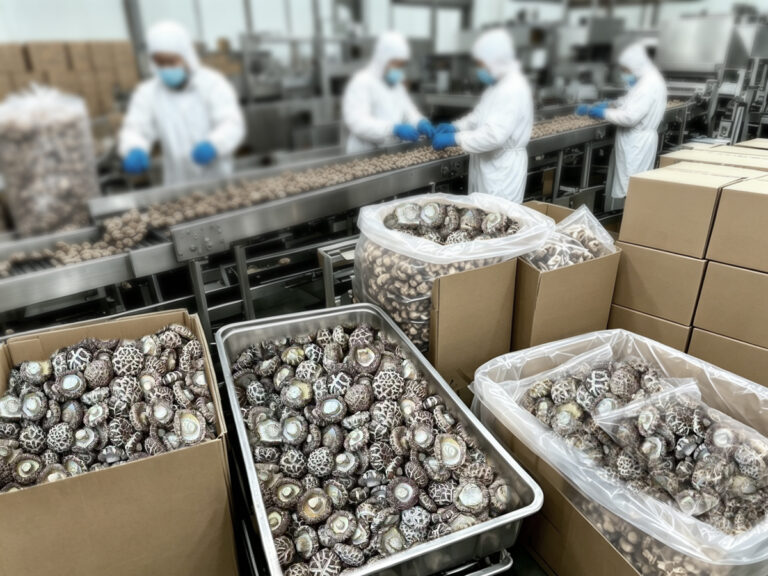
- Sorting and grading
- Cutting or slicing
- Custom packaging (retail or bulk)
- Certifications (e.g., food safety standards)
Buyers targeting high-end markets such as the EU or Japan usually require stricter processing standards, which increases pricing.
Additional Insight: Why Prices Vary So Much
Many new buyers focus only on price per kilogram, but experienced importers look deeper.
Two products may both be labeled “dried shiitake mushrooms,” yet differ significantly in:
- Thickness
- Aroma
- Appearance
- Shelf life
This is why price differences of 2–4 times are common in the market.
Final Thoughts
In summary, what determines the price of shiitake mushrooms is not just one factor, but a combination of origin, grade, size, drying method, moisture content, and market dynamics.
For buyers, understanding these factors helps:
✔ Avoid low-quality products disguised as bargains
✔ Ensure stable and consistent supply
✔ Build long-term partnerships with reliable suppliers
If you’re sourcing dried shiitake mushrooms, always compare samples, specifications, and consistency — not just price.
Recommended Internal Links:
https://www.ruihejin.com/products
If you are sourcing dried shiitake mushrooms for wholesale or food processing, feel free to reach out for specifications, samples, or pricing.
We’re happy to provide clear and reliable support for your sourcing decisions.
Feel free to contact us anytime. We’re happy to support your sourcing needs and provide tailored solutions.
WhatsApp:https://wa.me/8613682209753
Email:elina@ruihejin.com
Contact us today to get latest wholesale pricing and product specifications.