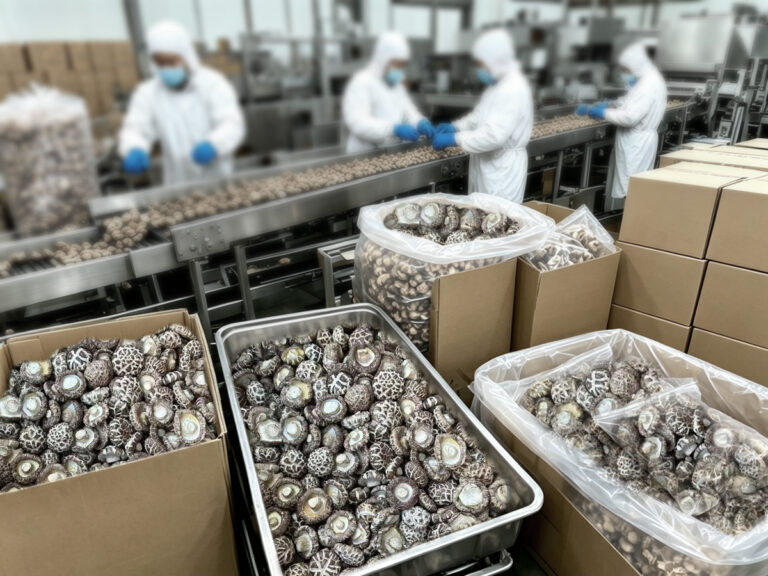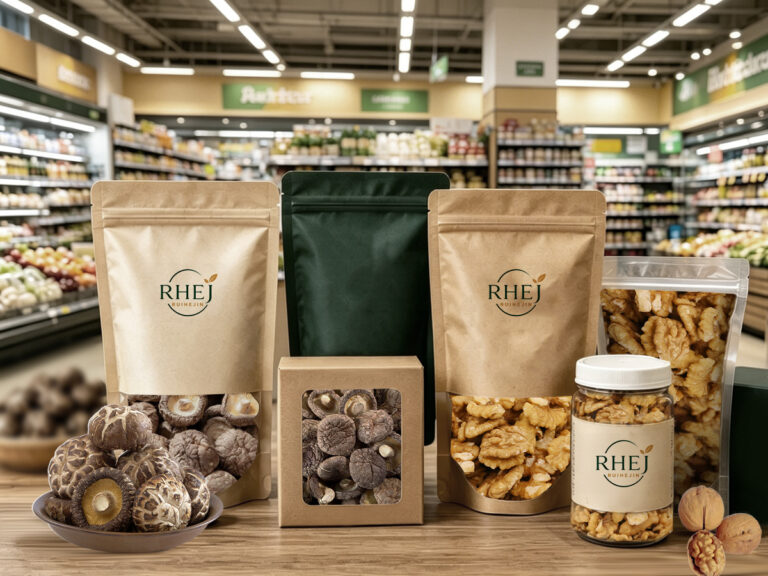

When people think of dried shiitake mushrooms, they often picture a whole dried mushroom with a dark cap, firm texture, and distinctive aroma.
However, for food manufacturers, ingredient buyers, importers, and foodservice businesses, dried shiitake mushrooms are available in many different forms.
Depending on the intended application, dried shiitake can be supplied as whole mushrooms, strips, pieces, granules, or powder.
Each format offers different advantages in terms of appearance, texture, processing, handling, and application. Choosing the right format is therefore not simply a question of quality—it is also a question of what works best for the finished product.
There is no single shiitake format that is suitable for every application.
Different Forms of Dried Shiitake Mushrooms
The main forms of dried shiitake mushrooms include:
- Whole dried shiitake mushrooms
- Shiitake mushroom strips
- Shiitake mushroom pieces
- Shiitake mushroom granules
- Shiitake mushroom powder
The right choice depends on how the mushroom will be prepared, processed, packaged, and consumed.
1. Whole Dried Shiitake Mushrooms
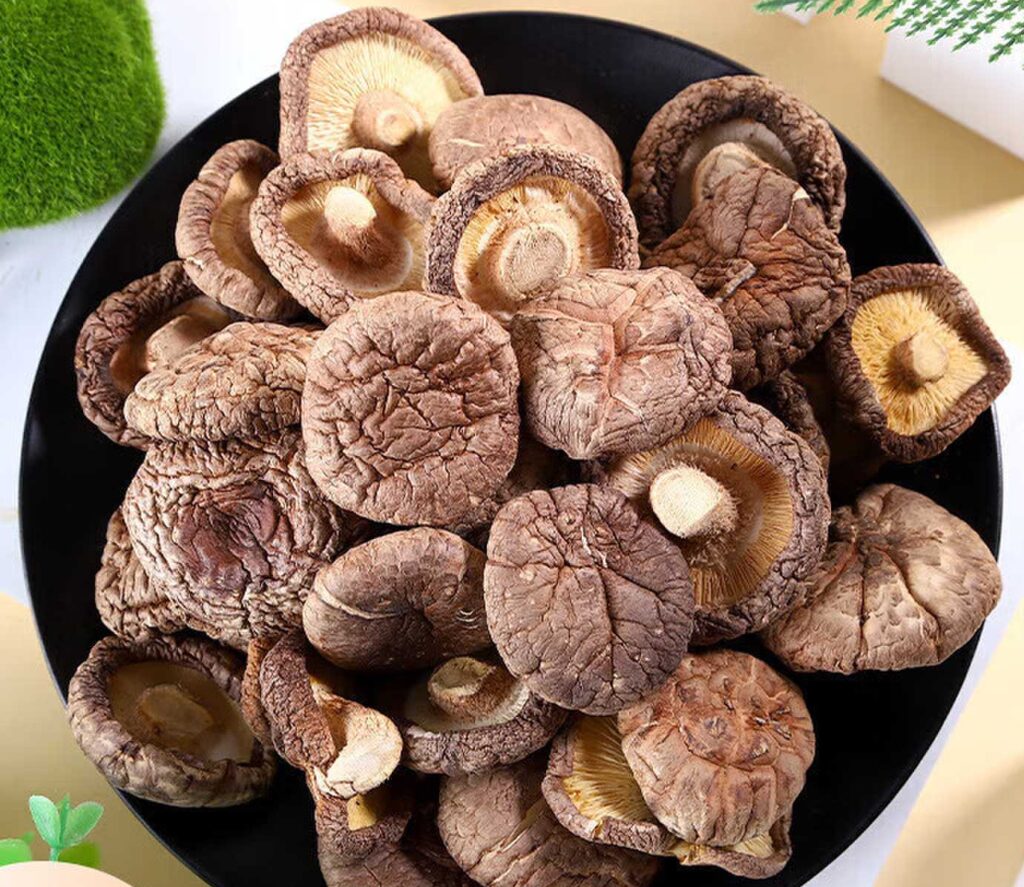
Whole dried shiitake mushrooms are one of the most traditional and recognizable forms of shiitake.
They are commonly used in:
- Home cooking
- Soups and broths
- Hot pot
- Restaurants and foodservice
- Traditional Asian cuisine
- Retail and private-label products
Whole mushrooms are particularly suitable when the mushroom itself is an important part of the eating experience.
For retail and foodservice applications, buyers may consider factors such as:
- Cap appearance
- Mushroom size
- Thickness
- Color
- Aroma
- Cleanliness
- Moisture condition
- Overall consistency
For premium retail products, visual appearance can be especially important because consumers can see the whole mushroom directly.
For buyers who are evaluating whole dried shiitake mushrooms, quality, grade, size, and intended use should all be considered together.
Related reading: How to Choose Dried Shiitake Mushrooms: A Practical Buying Guide
2. Shiitake Mushroom Strips
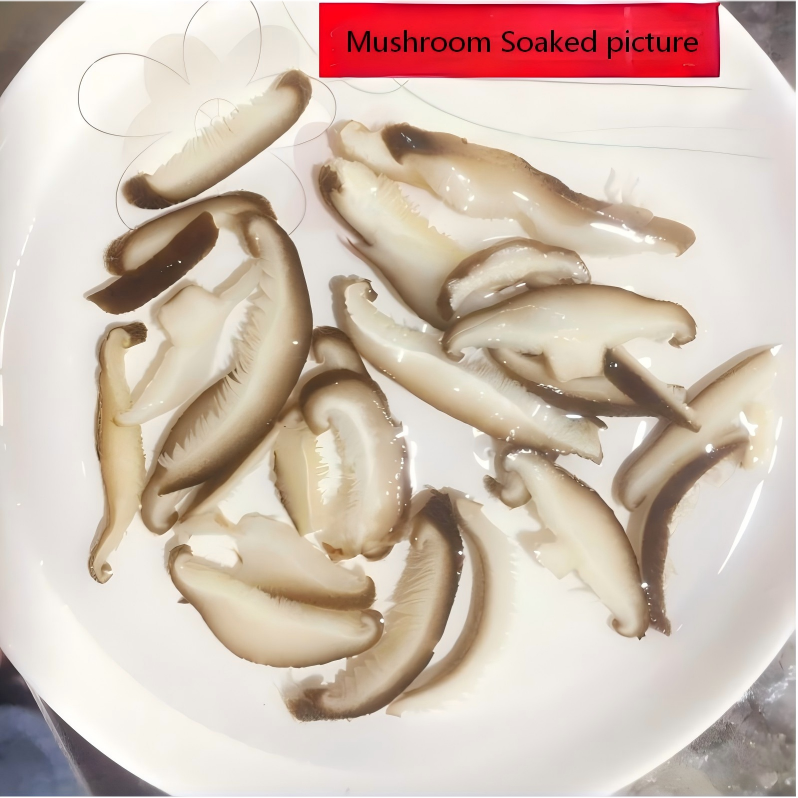
Shiitake mushroom strips provide a more convenient format while retaining recognizable pieces of mushroom.
Strips can be used in:
- Soups
- Noodles
- Hot pot
- Prepared foods
- Ready-to-cook products
- Foodservice applications
Compared with whole mushrooms, strips can reduce preparation work and make it easier to control the size and distribution of mushroom pieces in a finished dish.
For food manufacturers, factors such as strip width, length, thickness, consistency, and moisture condition may be relevant depending on the production process.
Strips are particularly useful when manufacturers want consumers to see and experience recognizable mushroom pieces without using whole mushrooms.
For industrial buyers, the required strip specification should be determined according to the finished product and processing method.
Related reading: [Shiitake Mushroom Strips: Uses, Applications and Buying Guide]
3. Shiitake Mushroom Pieces
Shiitake mushroom pieces offer greater flexibility for processed food applications.
They can be used in:
- Soups
- Sauces
- Fillings
- Dumplings
- Instant foods
- Prepared meals
- Noodle products
- Other processed foods
The appropriate piece size depends on the final application.
Larger pieces may be suitable when visible mushroom texture is important, while smaller pieces can be easier to distribute throughout a food formulation.
For manufacturers, pieces can provide a useful balance between recognizable mushroom texture and processing convenience.
This makes them suitable for applications where whole mushrooms are unnecessary, but the finished product still benefits from visible mushroom pieces.
Related reading: [Shiitake Mushroom Pieces: What Buyers Should Know]
4. Shiitake Mushroom Granules
Shiitake mushroom granules move dried shiitake further toward the food ingredient market.
Because the particles are smaller than larger mushroom pieces, granules can be easier to distribute throughout certain food formulations.
Potential applications include:
- Seasoning blends
- Soup mixes
- Noodle products
- Fillings
- Snacks
- Prepared foods
- Food processing
Granules can be a practical option when a manufacturer wants to incorporate shiitake flavor and mushroom particles into a product without using larger pieces.
Particle size and consistency can become particularly important considerations for industrial processing.
Depending on the application, buyers may need to specify the desired particle size, appearance, moisture requirements, and packaging format.
Related reading: [Shiitake Mushroom Granules: Applications in Food Processing]
5. Shiitake Mushroom Powder
Shiitake mushroom powder represents another important form of dried shiitake for food ingredient applications.
Instead of incorporating visible mushroom pieces, manufacturers can add powder directly to a formulation.
Potential applications include:
- Seasoning products
- Soup bases
- Sauces
- Noodles
- Snacks
- Prepared foods
- Food processing
One of the main advantages of powder is that it can be distributed more evenly throughout certain formulations.
Shiitake powder can contribute mushroom flavor and umami characteristics without requiring visible pieces of mushroom.
This makes powder particularly interesting for manufacturers developing seasoning products, sauces, instant foods, and other formulated foods.
For buyers, specifications such as particle size, color, aroma, moisture, cleanliness, and intended application may all need to be considered.
Related reading: [Shiitake Mushroom Powder: What Is It and How Is It Made?]
How Do You Choose the Right Shiitake Format?
The best shiitake format depends on the finished product rather than simply the mushroom itself.
A buyer should first consider several practical questions.
Does the mushroom need to be visible?
If visible mushroom pieces are important, whole mushrooms, strips, or pieces may be more suitable.
If the mushroom is mainly needed for flavor, granules or powder may be more practical.
What texture does the finished product require?
Different cuts provide different textures.
A soup or prepared meal may benefit from visible pieces, while a seasoning or formulated product may require smaller particles.
How will the ingredient be processed?
Mixing, filling, cooking, grinding, and packaging processes can all influence the appropriate format.
The same shiitake ingredient may work differently depending on the production process.
How consistent does the ingredient need to be?
For commercial food production, consistency can be particularly important.
Buyers may need to consider:
- Cut size
- Particle size
- Moisture
- Color
- Aroma
- Cleanliness
- Packaging
- Supply consistency
For this reason, it is useful for food manufacturers to communicate the final application when discussing specifications with a supplier.
From Whole Mushroom to Food Ingredient
The value of shiitake does not necessarily come only from selling the whole mushroom.
Different forms can serve different markets, processing requirements, and consumer needs.
The traditional path may be:
Whole Mushroom → Cooking
But the possibilities for food manufacturing are much broader:
Whole → Strips → Pieces → Granules → Powder → Food Ingredients
Each format creates different possibilities.
A retail buyer may prefer whole mushrooms with attractive appearance.
A noodle or soup manufacturer may prefer strips or pieces.
A seasoning manufacturer may need granules or powder.
A sauce producer may be more interested in powder or other processed mushroom ingredients.
This means that the question is not simply:
“Which shiitake mushroom is better?”
A more useful question is:
“Which shiitake format is right for my product?”
What Should Buyers Discuss With a Shiitake Supplier?
Before purchasing dried shiitake mushrooms or shiitake ingredients, buyers should clearly communicate their requirements.
Important specifications may include:
- Product form
- Cut or particle size
- Grade
- Color
- Aroma
- Moisture
- Cleanliness
- Quantity
- Packaging
- Intended application
- OEM or private-label requirements
- Export requirements
For food manufacturers, explaining the intended application can be especially helpful.
For example:
“We need shiitake pieces for soup production.”
or:
“We are looking for shiitake powder for a seasoning product.”
Providing this information allows the supplier to better understand the required specification and recommend a suitable format.
RUIHEJIN: Exploring Shiitake Beyond the Whole Mushroom
At RUIHEJIN, our current shiitake business focuses on the processing and export of dried shiitake mushrooms for international food and ingredient markets.
At the same time, we are exploring a broader shiitake product and ingredient system—from whole mushrooms and different cuts to granules, powder, and future food applications.
Our own processing factory provides a foundation for processing, quality control, and stable supply.
For importers, food manufacturers, ingredient buyers, and private-label businesses, the right shiitake format depends on the application, processing requirements, target market, and finished product.
If you are looking for a specific dried shiitake mushroom format or shiitake ingredient, contact RUIHEJIN with your application, specification, quantity, and packing requirements.
We can discuss suitable formats, specifications, packaging, and export options based on your needs.
RUIHEJIN — Exploring More Possibilities with Shiitake.
📲 WhatsApp: +86 136 8220 9753
📩 Email: elina@ruihejin.com